

coming home to ourselves
"We may act sophisticated and worldly but I believe we feel safest when we go inside ourselves and find home, a place where we belong and maybe the only place we really do.” - Maya Angelou

Hi friends,
Before we get into our weekly story work reflection, I have two updates:
The Story Work Healing Intensive. The Story Work Healing Intensive is a six-session group writing experience that uses creative writing as a tool for healing, self-discovery, and transformation. Over six sessions, participants are guided through creative processes designed to help transform limiting beliefs and past wounds into healing narratives, so you can access the wisdom in your lived experiences and move toward a more fully expressed life. The Intensive runs from March 19 - April 29. You can find all the specifics here.
Writing the Hard Things. I’ll be on Substack Live on Tuesday, March 10 at 2 pm ET chatting with Karen Wesley, the writer behind I Write Hard Things. We’ll be talking about my recent release, Story Work: Field Notes on Self-Discovery and Reclaiming Your Narrative, and I’m sure our conversation will venture into writing, vulnerability, healing, family, motherhood, and all the things.
And a request:
Have you read Story Work? If you’ve already read the book, I would truly appreciate it if you left a review on Amazon or Goodreads. Reviews help other readers discover the work. And if someone comes to mind who might benefit from it: a friend, client, book club, community group, etc., please consider sharing it with them or gifting a copy. I’m on a mission to get this book into the hands of readers and practitioners who are engaged in narrative healing work. Thank you for helping me spread the word!

Weekly Story Work Exercise
Our current theme is no place like home. Most story work exercises are open to everyone for one week, before they are paywalled for paid subscribers. You can find our recent themes here. You can find all the archives here. You can purchase a copy of my book, Story Work, here.
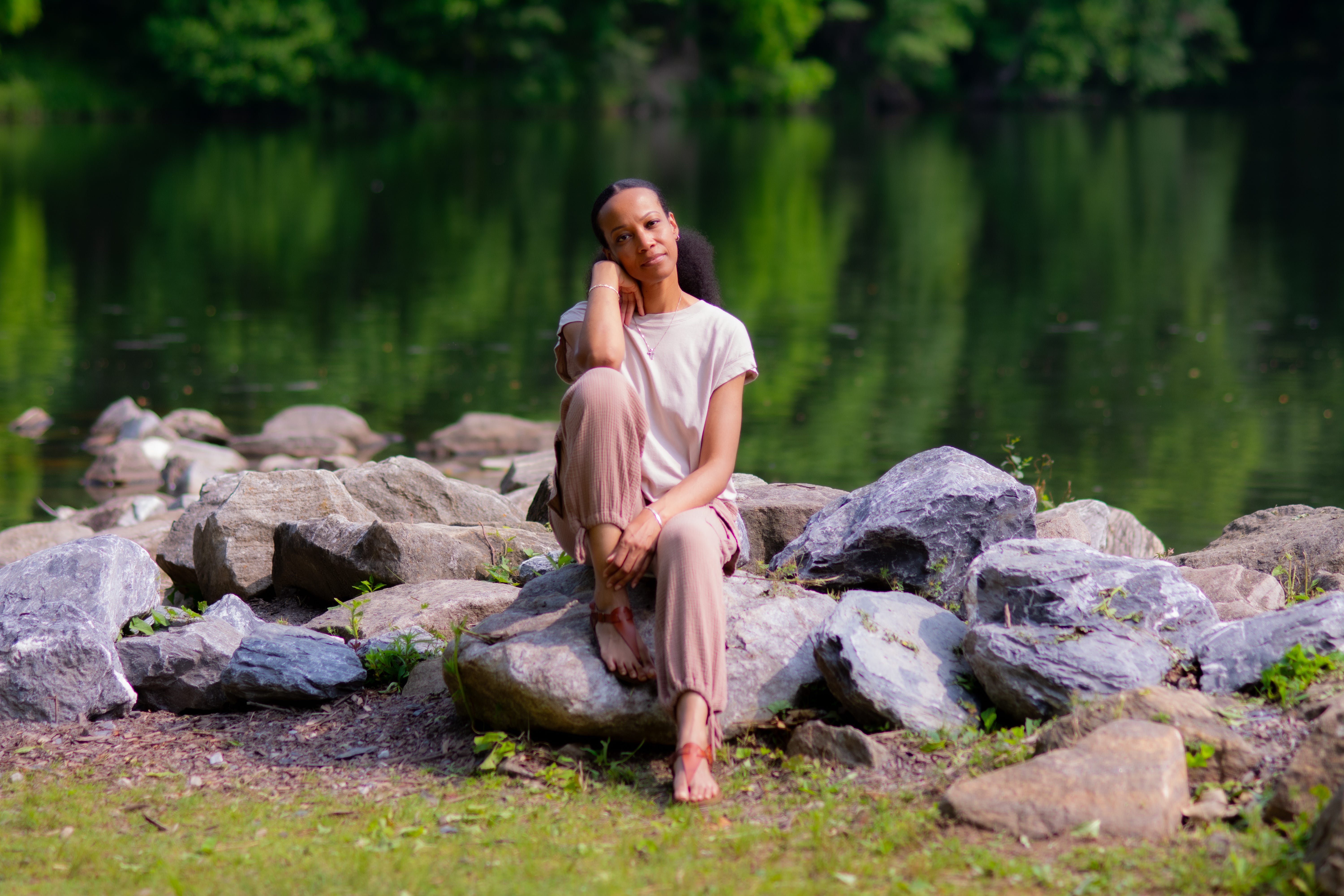
In 2018, a few months after my dad died, I started meditating almost every day. For the next six years, I nurtured this habit. It wasn’t a picture-perfect practice where I sat on a hillside in a cute outfit with my hair blowing in the breeze. Most mornings, I’d throw on sweats and a headscarf, walk my daughter to school, then come home and sit on the floor next to my unmade bed and close my eyes.
At the time, I was a highly emotional and reactive person. I started meditating because I wanted to feel at home in myself and stop flying away every time someone or something troubled the air around me. I couldn’t continue to ignore my demons and inner conflicts, escaping my grief by distracting myself with vices.
“What do you think about while you’re meditating? Or do you make your thoughts go quiet?” a friend asked me one day as he passed me a joint.
“I just kind of zone out,” I said, as I inhaled and held the smoke in my mouth. This was the simplest way I knew how to explain the practice to this friend, who couldn’t relate to my mental health woes or my ongoing exploration of healing modalities. His usual response to sadness, worry, and fear—his own or anyone else’s—is to say ‘suck it up’ and keep it moving.
But meditation was actually much more to me than zoning out. Much more than the escape I found through marijuana. In fact, it wasn’t an escape at all, it was a reunion. The more I practiced, the more I connected with this sacred, silent wisdom inside, this awareness of who I was and what I needed.
Meditation wasn’t new to me. I’d attempted many times before, but never kept up with it. My expectation that I should be able to make my mind go silent always made me feel like I was doing it wrong, and I would come out of it feeling more agitated than I started.
When I left corporate life in 2013, weed became my main coping tool. It softened the edges of the day, it made my racing thoughts slow down, it helped me block out everything except what I was doing in the moment.
But eventually, I had to admit that I was losing the ability to self-soothe without it. It was affecting my motivation, making my time blindness worse, and the numbness affected how I showed up as a mom. It even started to affect my physical health.
And yet the thought of giving it up terrified me. I didn’t feel at home in myself when I wasn’t in that altered state. Being sober felt like being a guest in someone else’s house.
After my dad died in 2017—and took part of my sense of home with him—meditation was something I knew I had to try again. No more quick fixes, this would take real commitment, and I was ready. I’d been hiding, ducking, and dodging for long enough.
In this series, we’ve been exploring the idea of home, what it means to us, and how that meaning evolves over time.
The question today is:
How do we cultivate an inner world that feels like home? A place where we can always find our truth, where we feel safe, and where belonging is not earned, it’s inherent?

“What if cutting out weed makes the world less interesting? What if music doesn’t hit the same and food doesn’t taste as good? What if I’m not as creative without it?” I tossed my worries at my friend one day as he smoked, and I didn’t.
“You won’t know until you try. Isn’t meditation supposed to be a natural high? I don’t get it, but maybe you will,” he said as he shrugged and exhaled.
Meditation didn’t get me high, but it did make the world seem more abundant. It helped me build a capacity for stillness and noticing without reacting. Over time, I found a reservoir of peace, a long and wide acceptance, an ability to sit inside the ache. And I don’t just mean a specific, situational ache, I’m talking about the chronic ache of life itself that hums beneath everything constantly for us all.
In the stillness I cultivated, I learned that the home I was seeking was built on staying true to myself. Being my own haven, no matter who I’m with, where I go, or what happens. Meditation gave me the reset I needed, and after those six years, it gradually became more of a tool in my arsenal and less of a daily practice. Eventually, weed became like an occasional glass of wine, no longer a daily supplement.
I’ve looked for home in people, in jobs and titles, in vices and escapes. Every path ultimately led me back to myself, handed me hard questions, and forced me to be honest about the ways I was squatting instead of fully owning my life.
When I reflect on my journey, the concept of home has helped me differentiate between what grounds me and what distracts me. I’ve learned how important it is to be present and intentional, because comfort and escape have their place, but without discernment, they can keep us stuck in old places, far from our higher callings.
Life is full of experiences that challenge us to see how rooted we are:
Maybe you’re leaving a job or career that once defined you, and you’re figuring out who you are when your identity is no longer tied to that role.
Maybe you’ve recently ended a relationship that once felt like home, and now you’re learning how to appreciate your own company again.
Maybe you’re navigating a mental or physical illness, and you’re learning how to love and nurture your mind and body in a fuller, more compassionate way.
Or maybe you’re ready to be honest with yourself about a dependency that is weighing you down, but you don’t yet know how to cope without it.
Whatever you’re facing, coming home to yourself won’t be easy, but it will be worth it.
Look inside and ask: What remains no matter where I go, no matter what I lose, no matter what happens?
The answer for me is always love. When I am tapped into that energy, I am home.
In today’s exercise, I’m sharing a narrative arc exercise to help you explore and reframe an old sense of home into something new and expansive.
Exercise:
If you’ve read Story Work or ever taken a storytelling workshop or intensive with me, you know I love using narrative arcs as a creative way to trace the movement of transformation and find meaning in our life experiences. The simple arc in this exercise allows you to examine and reframe places, people, possessions, habits, or whatever you once identified with comfort and belonging, to explore what a more authentic, self-rooted home might look and feel like.
Identify the old ‘home.’ Write about a place, relationship, or habit where you once sought safety or comfort outside of yourself, but it wasn’t in your best interest.
Create a narrative arc:
Beginning. How did you enter this home, space, or situation? What were your needs and motivations? What did this home feel like to you at the time?
Middle. What challenges, disappointments, or disconnects did you encounter? When did you feel small, unseen, or out of alignment with your values and truths? Include examples.
Ending. What insights and lessons does this exploration reveal about what it means to be at home within yourself? What would your choices, boundaries, or actions look like if you cultivated that inner home? What part of you is always there, and how can you find your way back to it?
upcoming workshops
Here are upcoming opportunities to write or work with me. To receive updates on my upcoming intensives and coaching programs, you can sign up for my offerings newsletter here.
March 19 - April 29. Story Work Healing Intensive // 6 - 8 pm et
March 22 and 29. Vulnerability in Personal Storytelling (via The Writer’s Center) // 2 - 4:30 pm et
March 28. Practice Session #26: Close Reading for Generative Writing // 12 - 1:30 pm et (free for paid subscribers and Inner Story members)
“In the stillness I cultivated, I learned that the home I was seeking was built on staying true to myself. Being my own haven, no matter who I’m with, where I go, or what happens.”
This has been so true in my life. I’m glad you attained this wisdom and clarity.